

Community
07 Apr 2026
Voices That Lead: Women Shaping Change

In honor of Women’s History Month, we connected with several women-led, POC-funded nonprofits whose transformative work is shaping communities and driving change. We asked them who inspires them and what advice they can offer to women that are pursuing similar career paths in community service—and here’s what they had to share:

Nirva R. LaFortune
Executive Director, City Year Rhode Island
Can you share a bit about your background and the journey that led you to where you are today?
I am an immigrant and, for much of my childhood, I was undocumented, gaining legal status just before entering high school. I grew up right here in Providence, in the West End and Lower South Side, and spent much of my adolescence in Washington Park. Today I live in Providence again and have raised my children here. This community has shaped every part of who I am. Growing up, I witnessed the strength and determination of the people around me. My parents, like many immigrant families, worked tirelessly to create opportunities for their children. Both worked as CNAs and spent long hours in factories, and my father often held multiple jobs, including working as a skycap at the airport. When my maternal grandmother came to the United States later in life, she too went to work in factories here in Providence well into her sixties, waking before dawn to catch a van or bus to work. From them I learned the meaning of sacrifice, perseverance, and the power of education.
I am the first person in my immediate family to graduate from college, the only one to earn an advanced degree, and I am now pursuing my doctorate in Education Leadership and Innovation at NYU. One of the most transformative experiences along that journey was joining City Year Rhode Island as a Young Hero in middle school. That program introduced me to service, leadership, and the belief that young people can shape the future of their communities.
More than thirty years later, I now have the privilege of leading City Year Rhode Island, an organization that partners with schools to advance student success while developing the next generation of leaders and a pipeline of workforce ready young adults. In many ways, my journey has come full circle. The same community that invested in me is the community I now have the privilege to serve.
My career has taken me across sectors, from the corporate world to education and public service, including serving as a Providence City Councilor and running for Mayor. Each experience has shaped how I understand leadership, responsibility, and opportunity.
What challenges have you faced along the way, and how did they shape the person and leader you’ve become?
My path has not been a traditional one. I became a mother just before my twentieth birthday and raised my son as a single parent while working full time and pursuing my undergraduate degree. It took me nearly ten years to complete my degree, and when I graduated from Temple University I was 27 years old.
There were times when the challenges felt overwhelming. I remember periods when I did not have stable housing and was calling shelters while trying to save money and continue working. For many years I did not have a car, which meant starting my day before sunrise to walk my son to a babysitter, catching buses and trains to get to work, attending evening classes, and returning home late at night before doing it all again the next day.
Those experiences shaped me in profound ways. They taught me resilience, resourcefulness, and how to navigate uncertainty when the path forward is not always clear.
More importantly, raising my son through those years gave me a deep sense of purpose. I wanted him to see that even when life presents obstacles, we can learn from failure, grow from our mistakes, and continue moving forward.
Those experiences continue to shape how I lead today. They keep me grounded in the realities many families face and remind me that leadership is not just about strategy or outcomes. It is about understanding people’s lived experiences and working to create opportunities that allow others to move forward with dignity and possibility.
Who are the women — past or present-who have inspired you most, whether personally or professionally?
A.The women who have inspired me most begin with the women in my own family. Both my paternal and maternal grandmothers shaped my understanding of strength, resilience, and sacrifice. My aunt, who was also my best friend growing up, played an important role in my life as well. Some of my favorite childhood memories are the simple moments we shared together going to the Big Top Flea Market or yard sales on summer Saturdays, walking around Sears and Ann & Hope, grabbing lunch at KFC, and simply talking.
I was also deeply influenced by educators and mentors who believed in me along the way. One of the most significant was Dr. Theresa Powell, the former Vice President for Student Affairs at Temple University, who passed away three years ago. She guided me through a pivotal time in my life and was a pillar of encouragement and wisdom.
My freshman year of college also had a lasting impact. I attended Bethune Cookman College, now Bethune Cookman University, founded by Mary McLeod Bethune, a visionary educator and civil rights leader who later became the first Black woman to serve in a presidential cabinet. Her legacy of leadership, education, and service continues to inspire me.
I have also drawn inspiration from the power of women’s voices through literature. Writers such as Edwidge Danticat, Toni Morrison, and Maya Angelou helped shape how I understand identity, storytelling, and courage.
The sisterhood of Alpha Kappa Alpha Sorority, Incorporated has also been an important source of inspiration, leadership, and lifelong support.
How has their example influenced your path or perspective?
A.The women who have shaped my life helped me understand the power of resilience, education, and service.
From my family, I learned the value of hard work, sacrifice, and community. From mentors like Dr. Theresa Powell, I learned the importance of lifting others as you climb and believing in people even when they cannot yet see their own potential.
Leaders like Mary McLeod Bethune showed me what is possible when courage and education come together in pursuit of a greater purpose.
Writers such as Edwidge Danticat, Toni Morrison, and Maya Angelou helped me understand the power of voice and storytelling, and the importance of claiming and sharing our experiences.
Something many people do not know about me is that I am an avid reader and I love to write. These women helped me find my voice and strengthened my belief that our stories matter.
Their example reminds me that leadership is not simply about position or recognition. It is about service, courage, and creating opportunities for others.
What advice would you give to the next generation of women and girls who aspire to follow a path similar to yours?
A. My advice is simple. Do not follow my path. Create your own.
Draw inspiration from others, but do not try to become them. You may admire someone’s journey, but you may not wear the same size shoes, and trying to walk in someone else’s path can be exhausting.
It is okay to take an unconventional road. I certainly did. There are many paths to purpose and success. What makes your journey meaningful are the experiences, lessons, and courage you bring along the way.
Trust your voice. Be bold enough to follow your own direction, and remember you do not have to do it alone. Seek advice, mentorship, and support along the way.
The very things that make you different may be the very things that allow you to change the world.
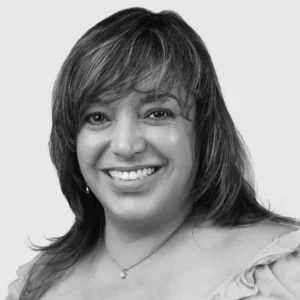
Anita Bruno
Executive Director, Women in the Trades
During Women’s History Month, I find myself reflecting on the women—both nationally recognized and closer to home—who have helped shape my perspective on leadership, resilience, and possibility.
Leaders like Ruth Bader Ginsburg and Ella Baker remind me that real change is often built through persistence, courage, and a deep commitment to justice. Ruth Bader Ginsburg showed the power of using the law to advance equality, while Ella Baker demonstrated how lasting movements grow when leaders empower others and build community. Their examples continue to influence how I think about leadership, advocacy, and the responsibility we have to lift others as we climb.
I’m also inspired by trailblazers in the building trades—women who have broken barriers and created space for others to follow. Tammy Rivera, the first female business agent for the New York District Council of Carpenters, represents what progress looks like in action. Stepping into leadership in a traditionally male-dominated field takes determination, credibility, and a willingness to open doors for the next generation.
Another powerful example is Vicky O’Leary, an ironworker who has used her experience in the field to advocate for safety and stronger protections for women in construction. Her work reminds us that progress isn’t just about getting women into the trades—it’s about ensuring they can work safely, be respected, and truly thrive once they’re there.
Together, these women—past and present—have shaped how I see the path forward. They remind me that leadership can mean standing firm in the face of resistance, lifting others up, and speaking out when change is needed. Whether in courtrooms, community movements, union halls, or job sites, their courage shows what’s possible when women lead with purpose.
To the next generation of tradeswomen: know that you belong in this industry. Your skill, determination, and perspective make the trades stronger. But just as important as learning the craft is building community with the women working beside you.
Sisterhood in the trades is powerful. When women support each other, mentor one another, and share knowledge, we create safer job sites, stronger crews, and a culture where everyone can succeed. Sometimes that support looks like helping a sister navigate her first job site, speaking up if someone is being treated unfairly, or simply reminding another woman that she’s capable and deserves to be there.
Empowerment in the trades isn’t just individual success—it’s collective progress. Every time one woman steps into a leadership role, learns a new skill, or advocates for safer working conditions, it opens the door wider for the women coming behind her. When we celebrate each other’s wins, share opportunities, and stand together, we build something even stronger than the structures we work on—we build a community.
The progress we celebrate today is because women before us imagined something better and had the courage to pursue it. The future of the trades will be shaped by the women who continue to show up, support one another, and build not just careers, but a lasting legacy for the generations that follow.

Marcela Betancur
Executive Director, Latino Policy Institute
Can you share a bit about your background and the journey that led you to where you are today?
I grew up in Colombia until I was 12, when I moved to Central Falls with my mom. As the kid of an undocumented single mother, my early life was shaped by the barriers and few opportunities that existed for us. After I attended and graduated from Rhode Island College, I realized that I wanted to reconnect and give back to the communities that looked like me and had similar struggles. This led me to work on affordable housing in my early career. However, while doing work around housing, I became aware of how much inequitable policies and practices impacted communities of color, immigrants, and so many other historically marginalized communities. This awareness transformed into eagerness to focus my work and energy on policy. Today, I’m proud to work in an organization that has fought for two decades to highlight and change the negative impacts of policies and the lack of investments among Latinos in Rhode Island.
What challenges have you faced along the way, and how did they shape the person and leader you’ve become?
As a first-generation college student in the U.S., I found it incredibly difficult and at times demoralizing to navigate the education system. Since my mom was undocumented while I was in college, I did not have access to the same type of loans that other students had. This created a lot of stress and anxiety every semester as I worked with the Financial Aid office to try to make ends meet.
As a young professional, I also faced several challenges in the workplace, especially microaggressions and dismissive behavior, especially from white leaders. For years, this led me to question myself and my skills. However, with time and support from friends and great colleagues, I pushed myself to take more risks and stand up for myself.
Who are the women, past or present, who have inspired you most, whether personally or professionally?
My mom is one of the most inspirational people in my life. Her determination, work ethic, and compassion have been exemplary ways to live and move through life. Even while she had to leave her family and country behind, she always led with focus and determination to ensure I had a safe home, food on the table, and a good education. She faced enormous challenges and discriminatory behavior at work and in society as an immigrant with little English language abilities. However, that never prevented her from putting on a big smile at work and doing her best.
How has their example influenced your path or perspective?
From an early age, my mom instilled in me a sense of care and responsibility for our community and neighbors, especially those who may have fewer opportunities than we do. Those lessons have remained with me. Thanks to her, I believe our society can thrive only when we all do. That if our neighbor is in need, we should lend a hand – regardless of how different they may be from us. Thanks to my mom’s lessons, I work to ensure that families like us are not left behind but thrive.
During National Women’s History Month, we reflect on progress and possibility. What advice would you give to the next generation of women and girls who aspire to follow a path like yours?
Surround yourself with humans who can cheer you on when you’re doing great things, but more importantly, when you’re failing. Create friendships and relationships with people who have lived different lives, because it is only through proximity that we can truly understand the world. Read, travel, laugh.
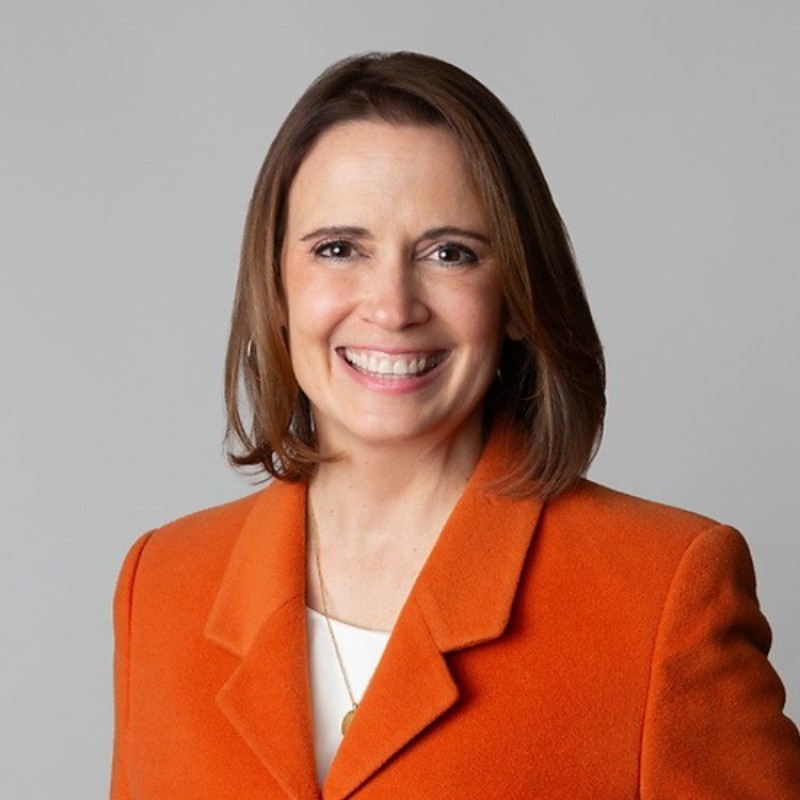
Julie Owens
CEO of Social Enterprise Greenhouse
Can you share a bit about your background and the journey that led you to where you are today? What challenges have you faced along the way, and how did they shape the person and leader you’ve become?
My journey has been shaped by a tension I’ve had to learn to live with: I am a relentless optimist, but also, by nature, a pragmatist. Holding both of those things at once—the hope and the realism—has become, I think, my greatest leadership asset.
Life has given me plenty of opportunity to practice. Early loss of my baby brother, seven moves in ten years as an Army wife, a cancer diagnosis in the middle of raising four young kids … none of it was in the plan. What those experiences taught me, and what I try to bring into my leadership every day, is that optimism is not a personality trait. It’s a practice. We can’t wish away hard things. Sometimes you have to sit in the difficulty. But you can choose to look for the good, for ways to create change. That choice, that relentless optimism, has shaped me as a person and as a leader, and it is very much the lens through which I approach the work we do at SEG. (If this resonates, check out my TEDx talk from last year on activating your optimism.)
Who are the women—past or present—who have inspired you most, whether personally or professionally? How has their example influenced your path or perspective?
There are so many!!
Professionally, I have to highlight Kelly Ramirez Stone, who preceded me as CEO of Social Enterprise Greenhouse. I vividly remember our first conversation, at the SEG Hub in Providence. After 25 years as a management consultant focused on health care systems, that conversation was a lightbulb moment: I could align my professional expertise in business strategy with my passion for social impact … through social enterprise. Now as CEO of SEG, I work every day with entrepreneurs who are building not just healthy businesses, but healthier communities. I’m grateful every day that this is the work I get to do.
Personally, it’s my mother-in-law, Rita Maloof Owens, I met her at 18, when I’d just started dating my now-husband. A retired nurse and Cumberland, RI native, she is the eldest daughter of nine siblings. Rita makes you feel truly seen; when she’s with you, her focus is entirely on you. She’s a caretaker and a ray of sunshine, but also a force of nature: she ran the New York Marathon at age 40, training after long nursing shifts, spent years leading her nursing union, and has never been afraid to speak her mind when it comes to social justice. She is one of my closest friends.
During National Women’s History Month, we reflect on progress and possibility. What advice would you give to the next generation of women and girls who aspire to follow a path similar to yours?
1. When you feel completely in over your head, recognize that as the sound of rapid growth. DO listen to it … and put in the work, whether that means leadership books, YouTube tutorials, or reaching out to mentors. But DON’T run from it. Those are the moments you’re really stretching into your future self. On the whole, women tend to quickly fixate on their own disqualifiers … all the reasons you might not be the right person, you might fail, you might not win. Try to look for the qualifiers instead. All the reasons you could.
2. Be proactive about networking—it is everything. Ask people in your closest circle to make connections for you and follow up. When you meet someone for coffee, come prepared: know what value you can bring to them and what you hope to learn. Ask for warm introductions. Send thank-you notes. Cultivate your network by helping people every chance you get … make an intro for them, invite them to something they might otherwise have missed, send them a note when you know they have something big happening (or when they don’t!). It builds community, it feels good, and I genuinely believe in karma … it comes back around.
3. Stay curious. Really listen when people around you are talking. Ask questions when you have them. There’s a notion that asking questions makes you seem weak or uninformed—I’d push back on that hard. I love when people I work with ask questions, especially when they’re questioning assumptions or pushing for clarity. We all leave the room smarter.